
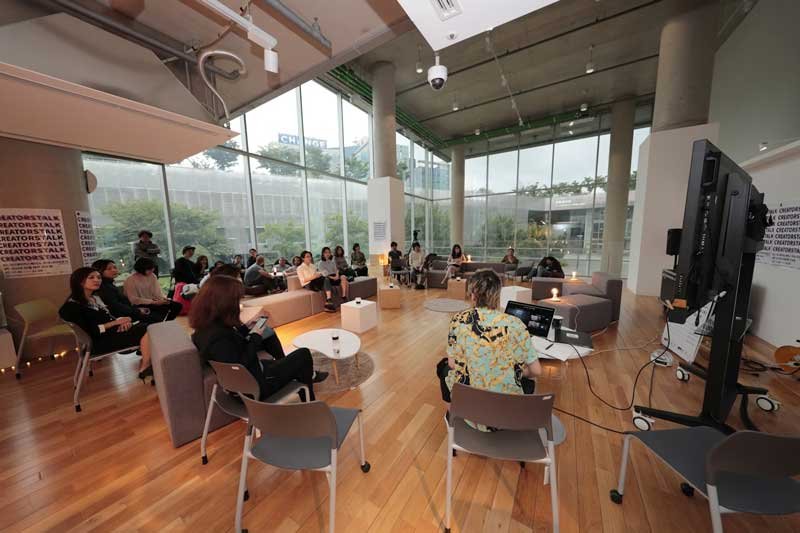
Traditional interviews rarely predict actual job performance. Candidates often prepare perfect answers, making it hard for managers to judge real capability. This creates a frustrating gap where individuals interview well but struggle with daily tasks once hired.
Modern recruitment requires a shift toward observation rather than just conversation. Hiring workshops offer a solution by allowing candidates to demonstrate their skills in real-time. An interactive workshop format also appeals to passive talent who often ignore standard job postings.
By focusing on active performance, organizations can move beyond surface-level resume data. This helps interviewers see exactly how a candidate handles professional friction. However, most hiring systems still rely on outdated signals.
Why Traditional Hiring Signals Are No Longer Reliable
Many hiring teams depend on resumes, degrees, and past roles to shortlist candidates. While this approach seems efficient, it has its limits. Skilled individuals without traditional credentials often get overlooked.
At the same time, some degree holders may lack practical ability. Even when companies try to change this, results remain limited. Harvard Business School notes that even when companies remove degree requirements, actual hiring changes remain limited.
Only about 3.6% of roles dropped degree requirements, leading to just a 3.5% point increase in hiring non-degreed candidates. In real terms, the shift affected only a small fraction of hires.
This gap highlights that employers often update job postings but fail to change evaluation methods or decision-making processes. This issue also appears in how interviews are conducted.
The structure of interviews creates another problem. They focus on responses rather than actions. Candidates can prepare answers, but they still lack real skills. This makes it difficult to predict job performance.
Organizations need better evaluation methods. Workshops address this gap. They allow candidates to demonstrate their skills rather than describing them. This shift improves hiring accuracy and reduces reliance on weak signals.
Why Workshops Are Gaining Ground in Modern Hiring
Hiring teams now compete for attention, not just talent. Many skilled professionals are passive candidates. These individuals are selective about new opportunities. Companies must create direct engagement to connect with these experts.
Workshops help bridge this gap and feel less formal than interviews. Candidates participate without the pressure of applying. This increases interest from high-quality talent. In competitive markets, this approach is more relevant.
New York City is a strong example of this competition, supported by recent employment data. The NYC Economic Development Corporation reports that private sector jobs reached record highs in 2025. As a result, teams need formats that stand out in this crowded landscape. In such environments, structured, in-person formats can support more interactive hiring setups.
Options like an event venue rental in NYC are often used for group discussions and skill-based activities outside traditional office settings. This makes the overall setup more important when designing such sessions.
The Farm Soho notes that the right mix of amenities and services can shape how participants engage during an event. These settings support group interaction and real-time evaluation.
Organizations can host sessions that encourage early connections. Managers observe candidates in action while they interact with others. This provides stronger insights than traditional interviews and turns a standard meeting into a more collaborative experience.
How to Structure Workshops That Reveal Real Ability
Not all workshops function as hiring tools. A clear structure is essential. Without it, the session becomes a networking event instead of an evaluation process.
Effective workshops include role-specific tasks. Candidates should solve problems similar to real job scenarios. This helps hiring teams assess how they think and respond.
Group exercises also play a key role. They reveal communication and teamwork skills. Observation is critical. Hiring teams should focus on the candidate’s approach, not just the final result.
A deeper look at hiring data reinforces this need. According to CIPD’s Resourcing and Talent Planning Report 2024, around 69% of employers report increased competition for skilled talent.
At the same time, 64% struggle to attract suitable candidates, while 52% see more unsuitable applications despite higher volumes. This shows why traditional screening often fails to identify the right talent.
Workshops support this shift. They allow teams to assess multiple competencies in one session. Technical ability, collaboration, and decision-making can all be evaluated together. This leads to better hiring outcomes.
Why Experience-Led Hiring Is Here to Stay
This approach is not a short-term trend. Broader workforce developments support experiential hiring. There is a clear move toward practical, skill-based evaluation. Federal workforce initiatives in late 2024 highlighted this direction.
A national summit brought together educators, employers, and workforce leaders to expand career-connected learning. According to The American Presidency Project, these efforts focused on scaling apprenticeships, workforce training programs, and early career pathways.
The efforts also highlighted expanding access to high-quality career pathways and strengthening connections between education systems and employer needs across industries.
Additionally, the initiative emphasized collaboration across sectors to prepare individuals with job-ready skills before formal employment. This signals a long-term shift, as hiring is moving toward real-world evaluation methods.
Workshops align with this direction. They combine learning, interaction, and assessment. Experiential hiring also strengthens employer branding, as candidates remember meaningful interactions.
A well-designed workshop reflects how a company operates and what it values. This model is scalable. It can be adapted for different roles and hiring needs. Over time, it becomes a core part of a modern hiring strategy.
People Also Ask
What are the best activities to include in a hiring workshop?
To maximize impact, use “day-in-the-life” simulations or collaborative whiteboarding sessions. These tasks force candidates to prioritize real deadlines and handle unexpected friction. Unlike static interviews, these activities reveal how a person manages stress and delegates tasks. This provides a realistic preview of their future daily performance on your team.
How do you evaluate cultural fit during a group hiring workshop?
Observe how candidates listen and contribute without dominating the conversation. During breaks or group transitions, pay attention to their natural social cues and empathy. Cultural fit is best judged when candidates don’t perform for the camera and interact authentically with their potential peers in a less formal environment.
How can companies measure the success of hiring workshops?
Companies can track success by evaluating candidate quality, engagement levels, and conversion rates from workshop to hire. Feedback from participants also helps refine the process. Over time, improved retention and job performance indicate that workshops are selecting candidates who are a better fit for the role.
Traditional interviews alone no longer provide enough insight into real performance. They fail to capture how candidates perform in real situations. Organizations need better approaches. Workshops offer a practical solution. They allow hiring teams to observe real skills instead of prepared responses. They also help engage candidates who are not actively applying.
When designed with clear intent, workshops become powerful hiring tools. They improve both candidate experience and hiring accuracy. As hiring continues to evolve, organizations must adapt. Experience-driven hiring methods will play a key role in attracting and selecting high-quality talent.