

Wells Fargo interviews run in stages: a screening round that is often a phone call or a group session, a behavioral interview built on tell-me-about-a-time questions, and for many branch roles a short role-play where you sell a product to the interviewer. Most applicants are eliminated at the behavioral stage, and almost always for the same reason: they answer a behavioral question with I have never been in that situation, which scores nothing. The Wells Fargo interview questions below cover all three stages, with the answers that clear each one.
Everything here comes from years on the hiring side of bank interviews and the question list Wells Fargo branches actually use, updated for how they hire now. Teller, personal banker, phone banker, and branch roles all draw from the same pool.
⬇ Download the full Wells Fargo Interview Guide (PDF, free)
How the Wells Fargo interview process works
Three stages, sometimes compressed into one visit: screening, behavioral, and role-play. Knowing which one you are in tells you what the interviewer is scoring.
Screening covers the classics: why us, tell me about yourself, five-year plans, why should we hire you, strengths and weaknesses, availability. It is often run as a group interview where applicants answer in turn. One rule matters there: if someone gives your answer before your turn, give it anyway. Group interviews at Wells Fargo exist to save time, not to compare you against the room; you are scored as an individual, so say exactly what you planned.
Behavioral is where the field thins. Every question asks about your past behavior on the theory that it predicts your future behavior. Never say you cannot answer. Use a real situation first; a plausible one you prepared second; and only as a last resort, “I have not been in that situation, but if it happened I would do the following,” then describe it.
Role-play closes for teller, personal banker, and phone banker roles: the interviewer plays a client and you offer a product, a credit card, an account upgrade, or a phone-banking pitch. They score whether you ask questions before you pitch, whether you listen, and whether you stay warm under a scripted objection.
The 20 Wells Fargo interview questions, with answers
The list below covers what tellers, personal bankers, and branch applicants meet across the three stages. Each comes with what the interviewer listens for and answers that have worked.
1. Tell me something about yourself
Interviewers do not want your family tree. Focus on personality, experience, education, and professional interests, and add one or two lines that show an outgoing, honest personality; banking hires for it.
Sample answer: “I am twenty, I like being around all kinds of people, and I want to learn the banking industry from the ground up. I graduated with good marks and I am looking for a role where communication skills matter. In my free time I play sports and read.”
2. Why do you want to work at Wells Fargo?
Interviewers know you would take a job at any bank. Convince them this one is your first choice with something specific: your experience as a customer, the product range, the branch you already use.
Sample answers: “I meet the requirements and I like what I have seen of the working environment as a customer here. I have applied to two other banks, but Wells Fargo is my first choice.”
“My whole family banks here, and I have always thought this bank offers the widest range of products for the widest range of clients. I would be proud to work here.”
3. Why this position?
Say you have the right traits for the role and, more importantly, the motivation; motivation is what banks struggle to find in tellers and bankers.
Sample answer: “I have the right personality for it and it is genuinely work I would enjoy. With that motivation, doing a good job as a teller comes naturally, and I will not be bored in three months.”
4. How did you hear about this job?
Recruiters use this to spot people who apply everywhere. Name the exact place you found the posting, or the friend who works here and recommended it.
Sample answers: “I check the Wells Fargo careers page regularly and applied two weeks ago when this posting appeared close to home.”
“A friend who works at your Dallas branch told me about the culture and a typical day. I liked what I heard and applied.”
5. What is your availability?
Do not sound desperate for any job, and do not sound unsure. The clean answer is the first of next month; if you cannot start that soon, say why.
Sample answers: “I can start on the first of next month.”
“I could start tomorrow, but I want to finish my current project properly; leaving overnight would be irresponsible. Two or three weeks and I am yours.”
6. How far are you willing to travel? Which location do you prefer?
More options means better odds. Say you have a car if you do, name your preferred branch, and skip explaining personal reasons for the preference; look flexible.
Sample answer: “I have a car, so I can work anywhere in the metro area. My first preference is this district, but twenty miles either way is fine.”
7. How do you handle stress?
Stay relaxed while you answer; if you visibly stress out over this question, nobody believes you handle pressure at a window. Say you prioritize well and that pressure does not degrade your work.
Sample answer: “I actually work better under some pressure. When the workload is heavy I prioritize and keep hitting deadlines. As you can see, I am not stressed right now, and this interview matters to me.”
8. What would you do if you knew someone was stealing?
Theft is rare at a bank with background checks; the question tests attitude. Employer first: report it to the manager immediately, no matter who it is.
Sample answer: “I would report it to my manager immediately, whether it was a close friend or my own supervisor. I am sure there is an internal policy for it, and I would follow it exactly.”
9. Have you ever worked in a bank before?
If yes, where and what role. If no, name related work: customer service, sales, cash handling. First job? Talk about what you have seen from the other side of the counter as a customer.
Sample answers: “I was a teller at City Bank for two years until our branch closed; I want to keep going in the same field.”
“Never in a bank, but two years as a shop customer assistant gave me cash-handling and customer experience, and I know what a good teller does because I bank here.”
10. Give an example of dealing with an irate customer and what you did to fix it
Clients will shout for no reason. Show that you stay calm, see the problem from their side, and shake off harsh words fast. No experience? Say what you would do, and never suggest arguing.
Sample answer: “At AT&T I dealt with angry customers over invoices constantly. I explained the numbers calmly in plain language, stayed friendly, and showed empathy when it was warranted. It worked most of the time, and the occasional insult did not follow me home.”
11. Give an example of going above and beyond with customer service
Talk about it with genuine enjoyment; tone is being scored. First job? Say what you would do.
Sample answer: “In my last job I visited a couple at home outside working hours to walk them through a mortgage plan against competitors’ offers, because they could not make it in during the day. Doing something extra for a client is the part of the job I like most.”
12. Talk about a successful sales experience
No sales job? We sell ideas all the time. Pick a moment you persuaded someone, and end with the lesson.
Sample answers: “As a customer assistant at a pharmacy chain I was the top seller on my shift because I gave honest advice and suggested add-ons that actually helped. Proactive beats passive; I plan to work the same way here.”
“I have not sold professionally, but I talked my daughter through choosing a business degree over a less practical option by laying out what it would do for her life. She applied. Selling an idea is still selling.”
13. What would you do if you were $500 short when balancing at the end of the day?
Say you double-check everything so it does not happen; if it did, you would go back through the records to find the error, report it, and if the money could not be found, make it up yourself. The attitude is what impresses.
Sample answer: “I balance carefully, so I doubt it will happen. If it did, I would go back through every transaction to find my mistake and report it to my manager. If we could not find it, I would cover it from my own pocket.”
14. If a customer accused you of bad service, what would you do?
Never argue. Ask what you could do better, try to fix it, and offer a more experienced colleague if you cannot.
Sample answer: “I would apologize and ask what I should have done differently. If I still could not satisfy them, I would bring in a colleague who could. I am sure the branch has a process for these moments and I would learn it.”
15. Tell me about a time you were busy and had to prioritize
Basic time management. One concrete example where you sorted the important tasks first, from work, school, or home.
Sample answer: “When a colleague quit suddenly I covered their duties for two weeks alongside mine. I listed everything, handled the critical items first, and worked long days, but nothing important slipped.”
16. Tell me about a time you thought it was important to follow a rule. Why, and how did it affect others?
Banks run on rules. Say you follow them and see them as normal and important; you can even say you prefer taking instructions to giving them.
Sample answer: “I once had to decide on a loan application from a close friend who did not meet the requirements. I declined it. It hurt the friendship, but I would do it again; rules in a bank exist for exactly that reason.”
17. Describe a time you resolved someone’s request. What was the situation, what did you find out, and what happened?
Three parts; answer all three, and pick something beyond your basic duties.
Sample answer: “A customer needed to know if a product was gluten-free and the label did not say. I called the sales rep, the manufacturer’s front desk, and someone in production before I got a definite answer. I then showed them alternatives that were, and they became a regular.”
18. This job can be repetitive. What would motivate you to do it well every day?
Either own a preference for routine done well, or argue that new clients and new problems keep it fresh.
Sample answer: “I know tellers repeat the same tasks, but the clients change, the data changes, and small problems come up all day. I do not find that repetitive; I find it steady, and I like steady.”
19. What are your salary expectations?
Look up the realistic range for the role in your market before the interview and name it, then make clear salary is not your deciding factor.
Sample answer: “Salary is not what decides this for me; I want the job and I would be proud to have it. From what I could find, tellers in this area start in the low-to-mid thirties, and I would accept that.”
20. Do you have any questions?
Ask one or two about the branch, the culture, or the next steps. Skip anything already in the posting.
Sample questions: “What does a strong first three months look like for a new teller here?” “What are the next steps in the process?” “How does the branch support people moving from teller to banker?”
Teller, phone banker, personal banker: how the emphasis shifts
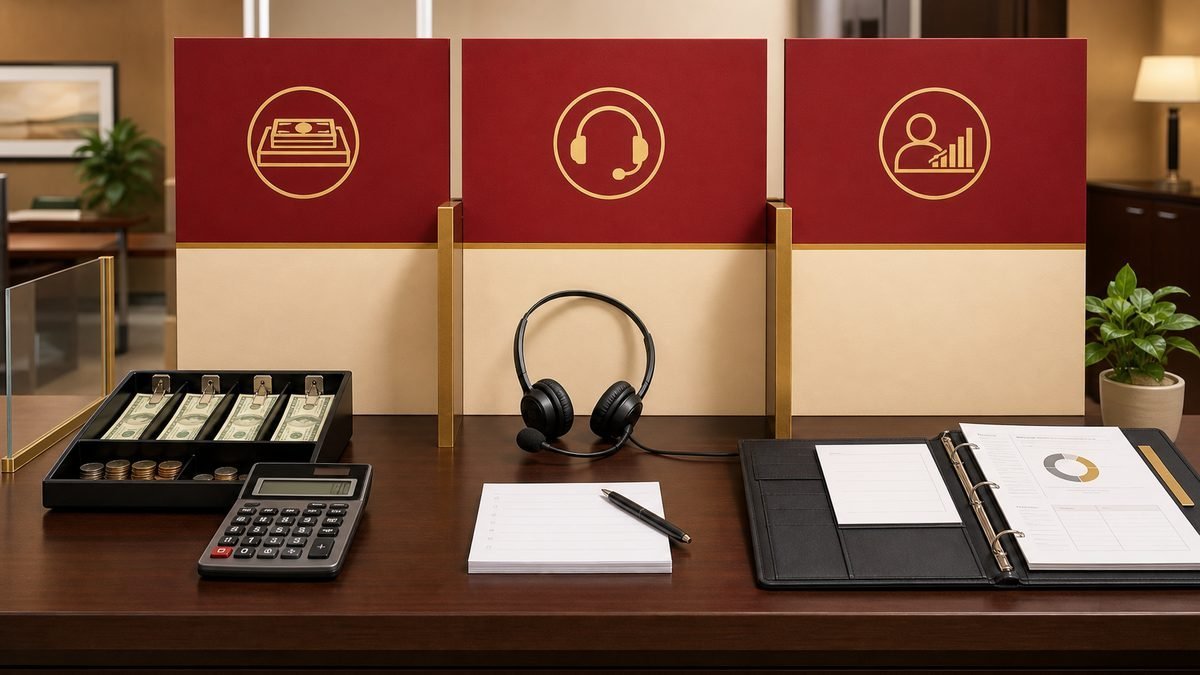
Tellers get the heaviest dose of cash-handling and rule questions: the $500-short scenario, following rules, dealing with irate customers at the window. Phone bankers get the role-play weighted toward selling by voice alone, and the interviewer listens for whether you ask a discovery question before you pitch. Personal bankers face the sales-experience and above-and-beyond questions hardest, plus a role-play with a scripted objection.
Whatever the role, the behavioral round is the one that eliminates people. Prepare five true stories before you walk in: a difficult customer, a rule you followed at a cost, a time you prioritized, a request you resolved by digging, and a sale or persuasion. Told in four sentences each, they cover nearly every behavioral question above.
Frequently asked questions
Is the Wells Fargo interview hard?
The screening and role-play stages are manageable; the behavioral stage is where most applicants are eliminated, almost always because they answer tell-me-about-a-time questions with “I have never been in that situation.” Prepared candidates with five ready stories pass at a high rate.
What questions does Wells Fargo ask in an interview?
Why Wells Fargo, why this position, availability and location, handling stress, an irate customer, going above and beyond, a sales experience, being $500 short at close, following a rule, and salary expectations, plus a role-play for teller and banker roles.
Does Wells Fargo do group interviews?
Often, at the screening stage: applicants answer the same questions in turn. It is done to save time, not to compare you against the room, so give your prepared answer even if someone else already said it.
What is the Wells Fargo role-play in the interview?
For teller, personal banker, and phone banker roles, the interviewer plays a client and you offer a product such as a credit card or account upgrade. They score whether you ask questions first, listen, and stay warm through a scripted objection.