
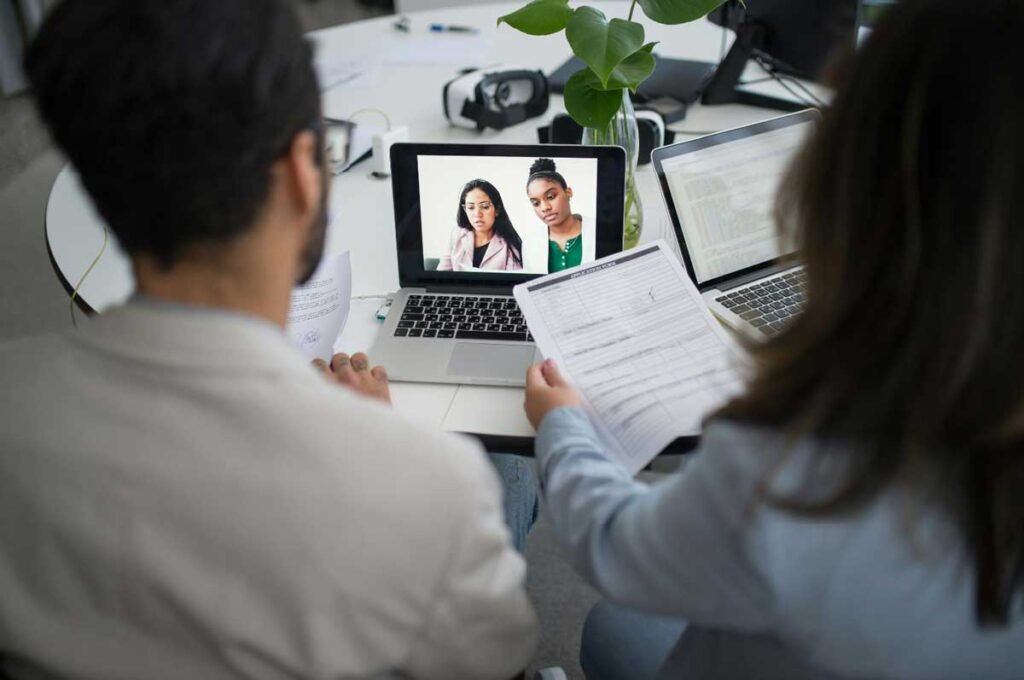
Being a healthcare professional in these times is indeed rife with challenges. Our world has been left shaken by the pandemic, and its remnants linger years after. The demand for thoughtful, capable healthcare professionals is also on the rise to helpcommunities recover and emerge stronger.
An important skill that recruiters seek in present-day healthcare professionals is the ability to collaborate effectively. The rise of multidisciplinary teams and integrated care has made collaboration mandatory in various capacities, from nursing professionals to physiotherapists and mental health experts.
Here’s the challenge: since collaboration is the buzzword right now, asserting it and not coming across as forced or fake can be tricky. The three ideas below can help you prove your mettle to a recruiter with authenticity.
Adopt an Everyday Lens Over a Crisis-Specific One
When trying to prove collaboration expertise, many of us turn to examples from crisis management. Healthcare, a field prone to crisis, is replete with instances that demand all hands on deck.
If you have been in this profession for a while, you will likely have a sizable collection of stories testifying to your ability to work in a high-pressure team. However, interviewers have heard these stories before. Several times.
The CDC reports that over 843,000 Americans succumb to heart disease or stroke annually. Around 98 million adults have prediabetes, which makes them highly vulnerable to developing diabetes and all its associated complications. Chronic conditions developing into abrupt crises and requiring healthcare teams to intervene have become, unfortunately, standard.
Instead of leaning into this narrative, why don’t you demonstrate your everyday skill at collaboration? Showcase your ability to work well with others even when things are running smoothly, thus improving productivity and allowing mental space for creative thought.
Consider a healthcare role in a hospice setting. A Hospice News feature observes that collaborative care training is integral to building a sustainable workforce. It helps avoid communication burnout. So, what you’ll need is collaborative work every day, not only in crises.
Attest to Your Academic Foundation
You already have an advantage in interviews if you have an academic degree that prioritizes collaboration skills.
For example, some AGACNP online programs, which train nurse practitioners for adult-gerontological acute care, help learners experience multiple team-based environments in virtual settings. These could involve working with professionals from diverse fields, such as trauma units and facilities for long-term care. More professionals now explore a virtual learning environment to have work-life flexibility while still completing their degrees on time.
Learnings like these prepare you to collaborate with allied professionals to achieve common goals for patient-centered care. Feel free to discuss these experiences during your interview, taking care to provide specific examples and highlighting your individual and team contributions.
According to Baylor University, a terminal degree can prepare nursing students for leadership and empower them to support patients through complex or chronic illnesses. Collaboration remains an essential skill in the leadership repertoire, which makes such programs worth discussing as career-defining moments.
Prove Ability to Collaborate With AI and Emerging Tech
In contemporary healthcare, AI and related technologies have become another absolutely essential facet of collaboration. There’s no escaping them, since the result of not using them can set businesses behind their competitors.
The World Economic Forum notes that AI is transforming healthcare in unprecedented ways, from decision-making with clinical chatbots to predicting ambulance needs.
For healthcare roles, collaborating with these technologies may involve a working knowledge of AI-based analytical and diagnostic tools. At a more advanced level, you may be expected to work seamlessly with retrieval-augmented generation systems or knowledge-rich digital libraries.
Share your experiences of working with AI during the interview through powerful examples and personal insights.
If you haven’t interacted with these tools before, you must demonstrate a willingness (and eagerness) to learn. This could be through courses you intend to take up or hands-on projects to hone nascent tech competencies.
Whatever you do, coming across as averse to collaborating with technology does not bode well for modern healthcare roles. You cannot be too snug in your comfort zone when opportunities for improving health outcomes are right around the complacency corner.
Building Collaboration From Within
Collaboration does not come naturally to everyone. Some people take pride in being individual contributors. They feel that collaborative roles don’t allow them to deliver their best.
You may face this challenge more deeply if you have an introverted personality or dislike group settings. However, introverts can also become great team players and leaders, empowered by active listening skills and the capacity to pay attention to detail.
Verywell Mind notes that introverted people may be more introspective and process information accurately. These are excellent strengths to bring to a collaborative environment.
In any case, in the healthcare profession, working together is not optional. Learning collaboration goes beyond getting brownie points during recruitment. It allows you to be better informed and develop a broader perspective to support patients.
Which is why the best strategy to demonstrate your collaboration skills during an interview is to work on them every day, grabbing opportunities for teamwork and knowledge sharing. Your efforts will reflect in your conversations.