
Bank of America runs one of the more structured hiring processes in retail banking. Whatever the format on the day, a phone call, a group of twenty applicants, a panel, or a one-on-one, the interview for nearly every branch and entry-level role has the same three stages: a screening round, a behavioral interview, and for tellers, personal bankers, and phone bankers, a role-play where you sell something to the interviewer. Most people are eliminated at the behavioral stage, and the role-play catches many of the rest. The Bank of America interview questions below cover all three stages, with the answers that clear each one and the two role-plays the bank has used for years.
The material comes from time spent interviewing candidates for Bank of America and from the question list branches still draw on, updated for how the bank hires now.
⬇ Download the full Bank of America Interview Guide (PDF, free)
How the Bank of America interview process works
Three stages, sometimes compressed into a single visit. You can be screened out at any of them, so prepare for all three.
Screening is a recruiter call, an online questionnaire, or a group session, and it asks the classics: why did you apply, tell me about yourself, what makes you a good candidate, why should we hire you, strengths and weaknesses, an irate customer, how past employers would describe you. The questions are the same for every position at this stage. How you answer matters more than the words: smile, speak clearly, and make it obvious this is not just another application to you.
If the screening is a group interview, up to twenty applicants answer the same question in turn. When someone gives your answer before your turn, give it anyway. Bank of America runs group interviews to save time, not to compare you with the room; you are scored as an individual, so say exactly what you planned to say.
Behavioral is where the field thins. Every question asks about your past behavior on the theory that it predicts your future behavior. Most applicants fail here because they answer with “I have never been in that situation,” which scores nothing. Never say you cannot answer. Use a real situation first; a plausible one you prepared second; and only as a last resort, “I have not been in that situation, but if it happened I would do the following,” and then describe it.
Role-play is the final test for teller, personal banker, and phone banker roles. The interviewer plays a client; you offer a credit card, an account, or a product over the phone. They do not expect a polished pitch or full product knowledge. They expect you to lead the conversation and not be afraid of the task. Refusing the role-play, for any reason, ends the interview. Two worked examples are further down.
Three things Bank of America checks that other employers do not
Your past, in detail. Banks are serious about background checks and it shows in the interview. Expect questions like the name of your last manager, your exact dates at a previous company, and your principal duties there. They are checking your resume for accuracy, preparing for the reference calls they will make later, and testing your attention to detail. Reread your own resume before the interview and be exact.
Your references. If they consider hiring you, they will usually call at least two former bosses or colleagues. Applications fail when a reference says something that does not match the interview or the resume. List only people who will speak well of you, and contact them in advance so the call from Bank of America is not a surprise.
How you look and how you wait. Dress the way employees at that branch dress; a quick visit tells you the style and colors. Interviewers respond better to applicants who already look like they belong. And expect to wait, sometimes an hour or more, on purpose. If waiting makes you visibly irritated, they draw the obvious conclusion about how you would handle a stressful shift. The interview starts when you enter the building and ends when you leave it.
The 16 Bank of America interview questions, with answers
Each question comes with what the interviewer is listening for and answers that have worked. Adapt them; do not recite them.
1. Tell me something about yourself
Interviewers are not interested in your family or your weekends. Focus on personality, experience, education, and professional interests, and add one line that shows an outgoing, honest personality; banking hires for it.
Sample answers: “I am twenty, I like being around all kinds of people, and I want to learn the banking industry and finance in general. I graduated from Lincoln High School with good marks. In my free time I play sports and try to learn something new.”
“My name is Jenni. I graduated from City University and I am looking for a job where I can use my communication skills and what I studied. A teller position would be a great start to my career.”
2. Why do you want to work at Bank of America?
Interviewers know you would take a job at any bank. Convince them this one is your first choice with something specific: what you have seen as a customer, the product range, the culture. Research pays here.
Sample answers: “I meet the requirements, and from what I have seen as a client of this bank I would fit the working environment well. I have applied to two other banks, but you are my first choice.”
“My whole family are satisfied clients here. I think this bank offers the widest range of products and solutions for the widest range of clients, and I would be proud to work for it.”
3. What do you know about Bank of America?
Focus on positives and pay a compliment if you can. Facts and numbers show you did your homework, but it is an interview, not a lecture: skip the history and pick two or three relevant things.
Sample answers: “Bank of America is one of the largest banks in the country by assets, and it is known for its digital banking, its customer service, and friendly tellers. I hope to become one of those tellers.”
“It has a reputation for a friendly working culture, real career growth, and a fair benefits system. I have read plenty about the goals and values, but I do not think that is what you want to hear about right now.”
4. Why do you think you can be a good teller (banker, analyst)?
Similar experience first if you have it. If not, list the strengths that fit the role. First job? Convince them you have the attitude and motivation. Bank of America trains every new hire thoroughly, so a lack of experience is not what stops people; a lack of motivation is.
Sample answers: “I meet the requirements for this role better than for any other you advertise, and I have done the same job before, so I can add value to the branch from the start and other people can learn something from me.”
“I have never worked in a bank, but I am eager to learn and motivated to work hard. I have read good things about your training, and I am confident I can become a great teller. The personality and motivation are there; I just need the training.”
5. Where do you see yourself in five years?
Bank of America hires people who want to stay and grow. It publishes career paths for nearly every entry-level job, so look one up and name a realistic next step; very few applicants for entry roles do, and it stands out.
Sample answers: “I would like a management role in a bank in five years. The ideal path is to start as a teller here, do a good job, keep learning, and be an assistant manager by then.”
“Senior financial analyst. I know I have a lot to learn, but the entry-level role in wealth management I am applying for is the right foundation, and I am ready to commit to it.”
6. How would your former colleagues describe your personality?
Do not downplay yourself; who else will say the good things? It is also fine to admit you are guessing, since everyone was focused on their own job.
Sample answers: “Likes talking to colleagues and clients, happy in the job, enjoys a busy floor. That is probably how they would put it.”
“Honestly, I am not sure. I focused on my work and I think they did too. But I can tell you how I would describe myself: motivated, enthusiastic, and optimistic. You are welcome to call them and check.”
7. How far are you willing to travel? Which location do you prefer?
More options means better odds. Say you have a car if you do, name a preferred branch so you get it if it is open, and skip personal reasons for the preference; look flexible.
Sample answers: “I have a car, so I am flexible. I can work anywhere in the metro area and the surrounding towns.”
“I would prefer this district, but twenty miles either way is no problem. I really want to work at Bank of America and grow here, so I would consider relocating if that is what it took.”
8. Have you ever worked in a bank before?
If yes, where and what role. If no, name related work: customer service, sales, cash handling, management. First job? Talk about what you have seen from the other side of the counter as a customer, and stress that you know what the job expects.
Sample answers: “I was a teller at City Bank for almost two years until our branch closed. I liked the work and want to continue in the same field.”
“Never in a bank, but I spent two years as a customer assistant in a shop, so I have the cash-handling and customer experience, and my communication skills improved a lot there.”
“This is my first job application. But I have a checking account here and I am in the branch often, so I understand what tellers do and how they behave. I am a quick learner and I know I can become a good teller.”
9. Give an example of dealing with an irate customer and what you did to fix the problem
Clients will complain or shout for no reason. Show that you stay calm, look at it from their side, and get over harsh words quickly. No experience? Say what you would do, and never suggest arguing.
Sample answers: “At AT&T I dealt with irate customers constantly, usually over invoices. I explained calmly, in plain language, why the numbers were what they were, stayed friendly, and showed empathy when it fit. It worked most of the time, and the occasional insult did not follow me home.”
“This is my first job application, so I have not. If it happened, I would try to understand the customer’s point of view, listen, and use what I knew to calm them down. I would not argue. I expect this behavior sometimes and it would not make me uncomfortable.”
10. Give an example of a time you went above and beyond with customer service
Tone matters as much as content: talk about it with real enjoyment. Interviewers want to feel that you like doing something extra for people. First job? Say what you would do.
Sample answers: “In retail, a customer asked a specific technical question about a computer we sold. I called a friend who is an electronics expert to get the right answer. The customer really appreciated it, and moments like that make me proud of my work.”
“In my last job I visited a couple at home, outside working hours, to walk them through our mortgage plan against other lenders’ offers, because they could not come in during the day. Exceeding expectations is how you get people to come back.”
11. Talk about a successful sales experience
No sales job? We sell ideas all the time, to colleagues, partners, and children. Pick a moment you persuaded someone and end with the lesson you took from it.
Sample answers: “As a customer assistant at Boots I was the top seller. I talked to customers, gave honest opinions, and suggested add-ons that actually helped. My numbers were strong every month. The lesson: proactive beats passive, and I plan to work that way in a bank.”
“I have never sold professionally, but I sold my children on studying business rather than a less practical field, by laying out what the degree could do for their lives. One of them applied to a management program. Selling an idea is still selling.”
12. What do you think will be the most challenging aspect of this job?
They want people who see the job realistically and will not lose motivation in week three. Say you expect challenges, that a perfect job does not exist, and that you know what is expected.
Sample answers: “Learning every nuance of the products and services so I can offer the right solution to each client. I am not an expert yet and it will take time, but I want to become one.”
“Every client is different, and some are angry or want something we cannot offer. Declining a request will be hard. But that is part of the job, and every role has its challenges; I do not expect this one to be different.”
13. What did you like and dislike most about your previous job?
Lean positive; nobody hires a complainer. Acceptable dislikes: the job stopped being challenging, there was no career growth, or you did not fit the team.
Sample answers: “I mostly enjoyed it. The store was well organized, I knew my job, and I got on with my colleagues. But the company became too small for me; I had learned what I could learn there. At this stage I should be at a bigger corporation with more development and career growth, and Bank of America is that.”
“People worked hard and the company had a clear vision, but I never found much sense of community there and stopped feeling happy in the role. Several people left for the same reason.”
14. Tell me about a time you were very busy and had to prioritize
Basic time management. One concrete example where you sorted the important tasks first, from work, school, or home; the attitude matters more than the setting.
Sample answers: “A colleague left unexpectedly and I covered their duties until a replacement was found. I prioritized ruthlessly and worked eleven-hour days for two weeks, and nothing important slipped. Good time-management training, looking back.”
“Preparing for my final exams while babysitting my little sister and working part-time. I made a daily plan, prioritized the study tasks, and worked through it task by task. It kept me from wasting time on things that did not matter.”
15. Tell me about a time you thought it was important to follow a rule. Why, and how did it affect others?
Bank of America runs on strict rules, like every banking giant. Say you follow them and consider that normal and important. You can even say you prefer taking instructions to giving them.
Sample answers: “One Monday a colleague came to work drunk. The rule was to report it, so I reported it to the manager, and he was dismissed the next day. I felt bad, but I would do the same again.”
“I once had to decide on a loan application from a close friend who did not meet the requirements. I declined it. She did not understand and it hurt our relationship, but I would make the same decision again rather than let emotion override the rules.”
16. Why Bank of America and not another bank, and how does it relate to your career plan?
Banks look alike from outside, and in salaries and environment they largely are. Point at something specific anyway: a commitment, a program, a reputation you have read about, then tie it to the path you want to follow inside the bank.
Sample answers: “The bank’s stated commitment to cost-efficient and environmentally sustainable practices matches what I think a bank should do for its community, and I did not find that elsewhere. On career, I want to become a senior financial analyst, and that path exists here.”
“From what I have read from former employees, Bank of America offers the most innovative and challenging environment among the big banks. That is why I applied here, and I am sure it was the right choice.”
The Bank of America role-play, with two worked examples
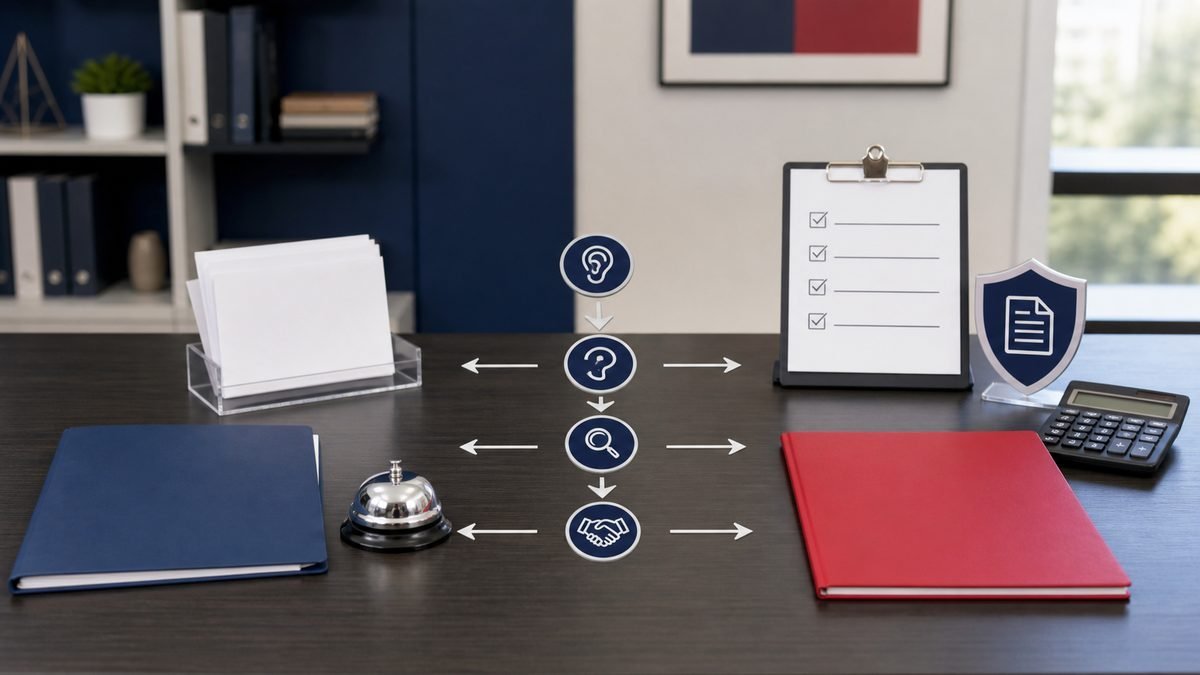
Role-play is the trickiest stage because you cannot rehearse the exact task. Plenty of “great tellers” who sailed through the first two stages fell apart the moment they had to offer a credit card properly. Three principles carry any version of it: ask the client questions instead of talking at them; look at it from the client’s side; and sell benefits, not features. (Eight airbags is a feature. Your family being safe is the benefit. Nobody buys the airbags.)
Role-play 1: offering a credit card at the window. The interviewer plays a client depositing money; the screen shows they have no credit card. A strong run: “While the transaction processes, may I ask you a couple of questions?” (they can hardly refuse; they are waiting anyway). “I see you do not have a credit card with us; have you heard about our new program?” (free information, not a hard sell). Then a one-minute pitch on benefits: it is offered to established clients, it gives you a spending cushion without needing money in checking, competitive rates, pay it off in one go or in installments, and it costs nothing if you never use it, so there is no obligation. When the client asks for a brochure to discuss with his wife, close softly: “Of course. Would you mind if I call you in a week to see how you decided?” A good teller uses every opening to close, and that is one a client rarely refuses.
Role-play 2: selling a notepad in front of the group. Yes, it feels silly. Take it seriously anyway. Open by uncovering the need: “Can I ask what you are looking for in a notepad?” When the client is not sure, recommend one, hand it over so they feel the size and weight, then bring in a benefit they cannot argue with: same paper quality, lower price, and people buy many notepads over time so price matters. Once they say yes, try for the add-on: “Would you like the matching pen?” Interviewers love that.
Practice a role-play three or four times with a friend playing the client. After that the principles run on autopilot and the stage stops being scary. Learn the bank’s main products beforehand, so you can name a specific benefit of a specific card; that alone earns credit from the interviewer.
Two things worth knowing: the talent pool, and the follow-up
Bank of America interviews even when a particular branch has no opening. It is building a database of hireable people, and a call can come a week later from an HR person you never met, offering a role at another location. Say you would consider other branches and other roles if your first choice is not available; it gets you into that pool faster, and you can always decline an offer without hurting later ones.
When the interview ends, thank the interviewer, leave with a smile even if it went badly, and send a short thank-you note the next day if you have heard nothing: you appreciate the chance, the conversation made you more motivated to join, you liked the branch. It cannot win the job by itself, but in a close decision it tips things, and it opens doors to other openings. Most applicants never send one.
Interviewing at other banks too? The Wells Fargo interview guide follows the same three-stage structure with its own question set.
Frequently asked questions
Is the Bank of America interview hard?
It is one of the more demanding retail-banking interviews: three stages, behavioral questions that eliminate anyone who says “I have never been in that situation,” and a role-play for teller and banker roles. Prepared candidates with real stories and a practiced pitch pass at a high rate.
What questions does Bank of America ask in an interview?
Tell me about yourself, why Bank of America, what you know about the bank, why you would be good in the role, five-year plans, how colleagues describe you, travel and location, bank experience, an irate customer, going above and beyond, a sales experience, the hardest part of the job, likes and dislikes of your last job, prioritizing, following a rule, and why this bank over another.
Does Bank of America do a role-play in the interview?
Yes, for teller, personal banker, and phone banker roles. The interviewer plays a client and you offer a product, typically a credit card at the window or a pitch over the phone. They score whether you ask questions, sell benefits, and stay confident; refusing the role-play ends your candidacy.
Does Bank of America do group interviews?
Often, at the screening stage, with up to twenty applicants answering the same questions in turn. It is done to save time, not to compare you against the room, so give your prepared answer even if someone else already said it.
How long after the interview does Bank of America respond?
Typically one to two weeks. Because the bank keeps a pool of screened candidates, an offer can also arrive from a different branch than the one you interviewed at, sometimes from an HR person you never met.