

Your resume gets you into the room, but it does not do the talking for you. That part is still yours. A smart way to prepare is to study strong resume examples, then look back at your own resume and ask which parts of it could become an interview story.
Job seekers tend to treat the resume and the interview as two separate steps. First, they write the resume. Then, once an interview is scheduled, they start guessing what the employer might ask. That creates unnecessary stress. Your resume already gives you the outline for many of your strongest answers.
Every bullet point, project, achievement, certification, or career change on your resume can be turned into something useful in an interview.
Why Your Resume Is More Than a List of Jobs
A resume is usually written in short lines. It has job titles, dates, skills, and bullet points. An interview, on the other hand, is a conversation. The employer wants to know what happened, what you did, how you worked with others, and what kind of employee you are likely to be.
That is why a resume bullet such as “improved customer response time” is not enough on its own. In an interview, you need to explain what you changed and what the result looked like.
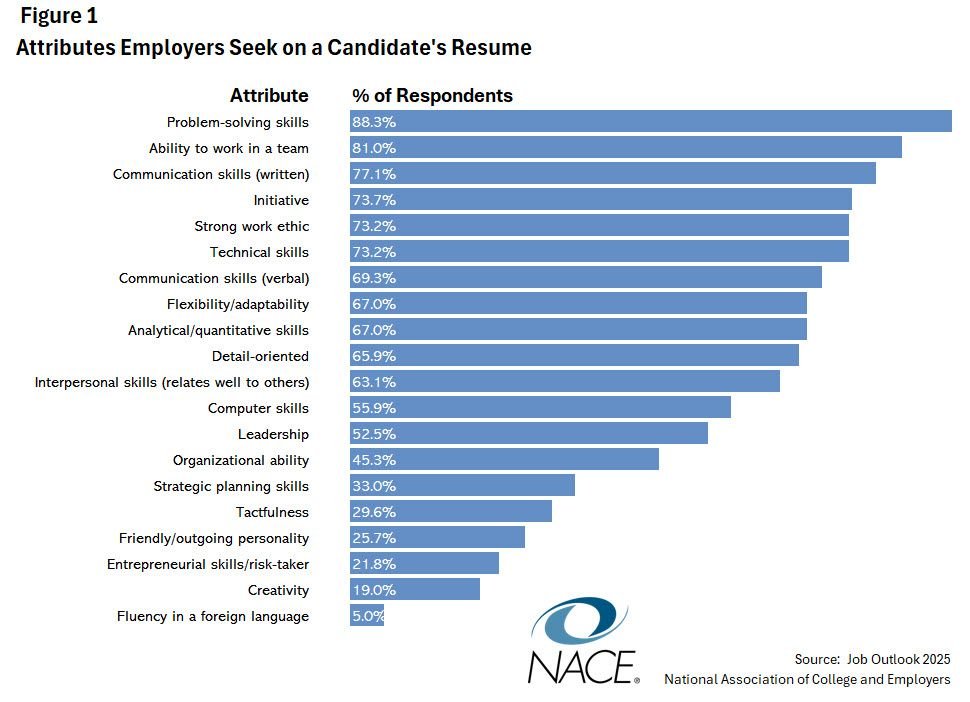
Basically, employers are looking for evidence of various skills. For example, nearly 90% of employers focus on problem-solving ability, while nearly 80% are interested in teamwork skills. You need to prove that you possess those skills through examples, and your resume is where the examples start.
Start by Marking Your Strongest Resume Lines
Print your resume or open it in a document where you can highlight text. Then mark every line that could lead to a question.
Look especially at:
- Achievements with numbers
- Promotions or added responsibilities
- Projects you completed
- Problems you helped solve
- Work with customers, patients, clients, or internal teams
Do not worry yet about perfect answers. At this stage, you are only finding the parts of your resume that deserve a story.
For example, if your resume says, “Trained three new team members,” that could become an answer to several interview questions. It might help you answer:
- “Tell me about a time you showed leadership.”
- “How do you help new coworkers?”
- “What is one responsibility you took on outside your main role?”
One resume line can support more than one answer, which means you do not need to memorize twenty completely separate stories.
Build a Small Story Bank Before the Interview
Most interviews come back to a few familiar themes: teamwork, pressure, conflict, mistakes, learning, leadership, and problem-solving.
Choose five or six stories from your resume and write a short note for each one. Keep them simple.
For each story, note:
- What happened
- What you did
- What the outcome was
- What skill it shows
One story might show teamwork and communication, while another might show problem-solving and attention to detail. In this case, your job interview coaching begins with recognizing which real experiences are worth talking about and how to explain them clearly.
Don’t overthink it. The best stories usually come from normal work. A time you fixed a process, helped a coworker, learned a system, handled a difficult customer, or met a deadline can be more convincing than an exaggerated big win.
Keep the Resume in Front of You but Do Not Memorize Your Answers
Memorized answers can sound stiff, and if the interviewer asks the question in a different way, you may lose your place.
Instead, remember the shape of the answer.
For each story, know the situation, your action, and the result. The exact words can change. That makes you sound more natural and more present in the conversation.
Practice out loud, but do not aim for a performance. If one answer takes three minutes, try again and make it shorter. If an answer feels vague, add one specific detail.
Good interviews usually feel like effortless conversation.
If the interview is online or by phone, keep a copy of your resume nearby. If the interview is in person, bring copies with you. This helps you stay aligned with what the employer has already seen.
You can also use your resume to guide answers without reading from it. For example:
“One project I mentioned on my resume was the inventory cleanup project. That is a good example of how I handle detailed work.”
This feels natural and reminds the interviewer where the experience fits.
Final Thoughts
A good resume becomes your preparation guide for the interview. Look for proof of the skills the employer wants, and prepare a few honest examples that show how you solve problems and handle people.
When your resume and your interview answers support each other, the employer gets a clearer picture, not just of what you have done, but how you think and how you could fit into the role.