
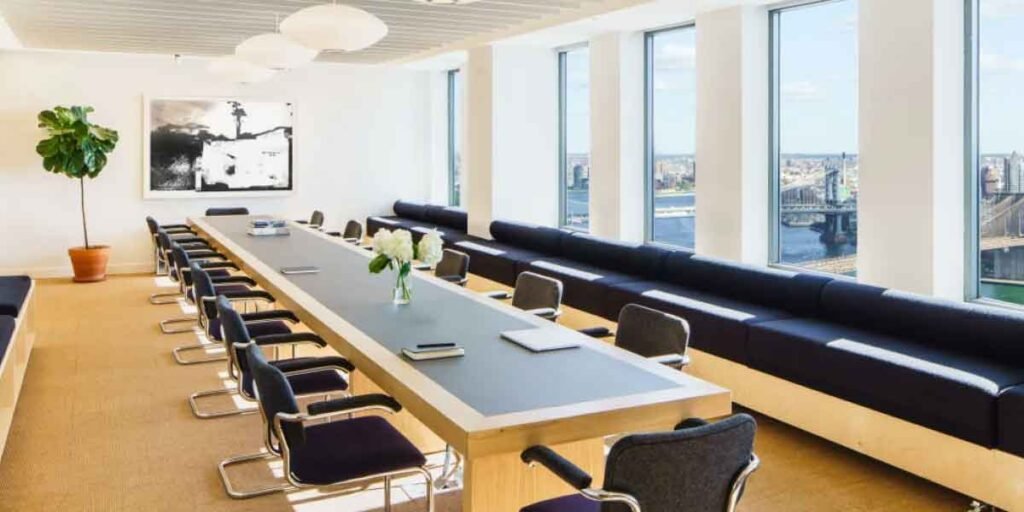
Most interview guides focus on the candidate. What to say, how to dress, how to handle tough questions, how to follow up. The preparation advice is thorough and well-documented.
What gets almost no attention is the room itself.
This matters more than most hiring managers realise. The physical environment of an interview shapes the candidate’s impression of the company before a single question is asked. It affects how relaxed they are, how honestly they communicate, and how likely they are to accept an offer at the end of the process. Get the room wrong consistently enough and you will find that your strongest candidates are the ones who walk away least impressed.
Here is what a well-set-up interview room actually requires, and what to do when your current space does not meet that standard.
Why the Interview Room Reflects Your Company
When a candidate arrives for an interview, they are evaluating you as much as you are evaluating them. This is especially true for experienced professionals and senior hires who have options. They are looking at how organised your reception is, whether they were greeted professionally, how the space they are taken to is set up, and whether the room communicates that the company takes its hiring process seriously.
A cluttered room with leftover materials from a previous meeting, unreliable air conditioning, and a window that faces directly into a noisy open-plan floor sends a message about how the company operates. So does a clean, well-lit, acoustically private room where the only thing on the table is water and a notebook.
You are not just assessing them. They are assessing you. The room is your first credibility signal.
The Eight Elements of a Good Interview Room
- Acoustic privacy. This is the single most important requirement. Conversations about compensation, previous employers, personal circumstances, and professional challenges are private. A candidate who can be heard through the wall, or who can hear adjacent conversations while trying to answer your questions, is not in a position to give you their honest best. Walls and a door that close properly, not glass partitions with nominal sound separation, are the baseline.
- Appropriate sizing for the format. A one-on-one screening interview and a four-person competency panel have very different space requirements. A room that seats twelve is uncomfortable and subtly intimidating for a two-person conversation. A room for four that seats six adequately is much better. Match the room to the interview format, not to some default booking.
- Seating that matches the dynamic you want. A long rectangular table with the interview panel on one side and the candidate alone on the other creates an adversarial geometry that is rarely what you are actually after. For most interview formats, a round table or a corner arrangement where panel members are at a slight angle to the candidate rather than directly across produces better conversation quality. People relax differently when they are not facing you directly across a formal divide.
- Natural light where possible. Interview rooms with natural light produce measurably better conversations than windowless boxes with fluorescent overheads. If you have a choice of rooms, choose the one with windows. If you do not, ensure the artificial lighting is warm rather than harsh.
- Temperature that is comfortable throughout. A room that starts at a reasonable temperature and becomes uncomfortably warm after forty minutes of occupancy is not a minor inconvenience. It shortens candidate patience for difficult questions, reduces your own focus, and produces a rushed end to a conversation that needed more time. Check the room temperature before the candidate arrives, not after.
- Water on the table. A small thing. Candidates and interviewers both benefit from having water available without having to ask or leave the room. It reduces a background level of discomfort and communicates that the room was prepared for this conversation specifically.
- Technology that works before the candidate arrives. If the interview involves a video call with a remote panel member, the AV setup should be tested and working before the candidate sits down. A ten-minute technical troubleshooting session at the start of an interview is not recoverable. Test everything, including the audio, fifteen minutes before the scheduled start.
- A clean, uncluttered space. Remove any materials from previous meetings. A whiteboard covered in someone else’s session content, folders left on the table, or a general sense that the room was not specifically prepared for this candidate undercuts the impression you are trying to make.
What to Do When Your Existing Space Is Not Adequate
Not every company has a dedicated interview suite. Startups, growing businesses, and companies with limited office space often find that their existing meeting rooms are too small, acoustically compromised, or simply booked out when interviews are scheduled.
The solution is straightforward: rent one.
Premium coworking and serviced office providers in most major cities offer meeting rooms on an hourly basis with no membership requirement. For companies hiring in Singapore, The Work Project operates a network of professionally managed meeting rooms across ten Central Business District locations that are purpose-built for exactly this kind of use. Founded by hospitality professionals, the operator brings a hotel-standard service level to the rooms and the arrival experience, which means your candidate walks into an environment that reflects well on your company before the interview has begun.
The practical case for renting externally rather than using an inadequate in-house room is simple: the cost of renting a quality meeting room for two hours is a fraction of the cost of losing a strong candidate because the interview environment communicated organisational mediocrity. If you are interviewing for a role that pays a meaningful salary, the room hire is an investment with a clear return.
When external room hire makes sense:
- Your in-house meeting rooms are consistently booked on interview days
- Your existing space lacks adequate acoustic separation for confidential conversations
- You are a remote or hybrid company that does not maintain a permanent office
- The role you are hiring for involves candidates who are assessing your operational quality carefully
- You are conducting a multi-stage interview day that requires a dedicated space throughout
The Quick Pre-Interview Room Checklist
Run through this before every candidate arrives:
- Temperature comfortable and stable
- Acoustic separation confirmed, door closes properly
- Table cleared of all previous meeting materials
- Water on the table
- Seating arranged for the specific interview format
- Lighting adequate, harsh overheads off where possible
- AV and video conferencing tested and working if needed
- Any technical equipment connected and confirmed
- Your notes and the role brief reviewed so you arrive ready, not catching up
The interview room is the first thing a candidate experiences from your company that is not a website or a job posting. It is worth getting right.